
Retaining Wall Repair & Reinforcement in Herriman, UT
A leaning or cracking retaining wall is a warning sign, not a cosmetic issue. We diagnose the root cause and reinforce or repair the wall before hydrostatic pressure turns a small problem into a collapse.
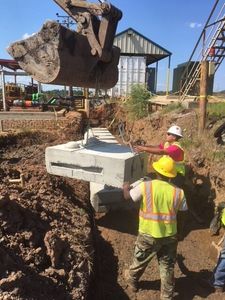
Restoring Strength and Stability to Damaged Retaining Walls
Retaining walls fail for predictable reasons — usually water. When drainage behind a wall stops working, hydrostatic pressure builds until the blocks can't hold it back. Soil settlement, undersized footings, and freeze-thaw cycles accelerate the damage. We don't just patch the visible crack; we find and fix the underlying cause so the repair actually lasts.
Identifying the Root Cause
We inspect drainage, footing condition, soil type, and wall geometry to find why the wall moved in the first place.
Targeted Reinforcement Techniques
From resetting blocks to adding geogrid tiebacks, we apply the right fix for the specific failure mode.
Preventing Future Failure
Repairs include drainage improvements so the same pressure that caused the damage doesn't return.
Common Signs Your Retaining Wall Needs Repair
Catching these early can mean the difference between a quick reinforcement and a full rebuild.
Leaning or Bowing Wall Sections
A wall tilting outward at the top is the clearest warning that soil pressure has exceeded the wall's capacity.
Cracks and Separation in Blocks
Horizontal or stair-step cracks, and gaps opening between blocks, signal movement and stress concentration.
Poor Drainage and Water Pooling
Water pooling near the base or no visible weep holes means hydrostatic pressure is likely building behind the wall.
Soil Erosion Around the Base
Washed-out soil at the toe means water is undermining the footing — a precursor to collapse.
Our Repair and Reinforcement Solutions
We match the fix to the failure — not a one-size-fits-all patch.
Rebuilding and Realigning Displaced Blocks
We carefully dismantle the affected section, reset the base, and rebuild with proper interlock and level courses.
Improving Subsurface Drainage
We add or restore gravel backfill, filter fabric, weep holes, and drain tile so water never builds up behind the wall again.
Adding Structural Anchors and Geogrid
For walls under heavy load, we install geogrid tiebacks or anchors that tie the wall back into the retained soil.
FAQs About Retaining Wall Repair
Can a leaning retaining wall be repaired, or does it need replacement?+
Many leaning walls can be reinforced rather than fully replaced — it depends on how far the wall has rotated, the condition of the blocks, and whether the footing is still intact. We assess each wall and recommend repair whenever it's safe to do so.
How long do repairs take?+
Most targeted repairs — resetting blocks, clearing drainage, adding reinforcement — take one to three days. Larger reinforcement projects may take longer, and we'll give you a clear timeline before starting.
Is a leaning wall dangerous?+
A wall that's visibly leaning or bowing is under active stress and can fail suddenly under heavy rain or snow load. We treat leaning walls as priority inspections and can respond quickly to assess the risk.
What causes retaining walls to fail in the first place?+
The vast majority of failures trace back to poor drainage, inadequate base preparation, or undersized reinforcement. Water builds up behind the wall, pressure exceeds what the blocks can hold, and the wall pushes outward or collapses.
Don't Wait for a Wall to Collapse
If your wall is leaning or cracking, let us assess it before the next storm. Free estimates on repair and reinforcement.
Wall beyond repair? Learn about our replacement and reconstruction services, or explore new wall installation, or head back to our homepage to explore everything we offer.